- Understanding Personal Loan Eligibility in India
- How Banks & NBFCs Actually Check Your Eligibility
- Bank vs. NBFC: Eligibility Approach
- Core Personal Loan Eligibility Criteria in India
- Eligibility Calculation – With Real Examples
- Factors That MOST Impact Personal Loan Approval
- Personal Loan Eligibility for Different Profiles
- Why Personal Loan Applications Get Rejected
- How to Improve Your Personal Loan Eligibility (Step-by-Step)
- Personal Loan Eligibility Myths vs Reality
- Documents Required for Personal Loan Eligibility Check
- Personal Loan Eligibility FAQs
- Final Thoughts – How to Maximize Approval Chances in 2026
- External Resources for Further Reading
- Disclaimer
Hey, I am Avinash. If you are feeling stuck because you do not know the personal loan eligibility criteria India, you are definitely not alone. It is hard out there. Banks say one thing, but they often do another behind closed doors. Last month, a close friend of mine, Sameer, applied for a five-lakh loan. He had a steady job and a decent salary.
Yet, he got a rejection letter in two days. Why? He did not understand how the system actually looks at him. I have spent years helping people navigate these murky waters. Today, I want to pull back the curtain for you. We will look at how you can fit the personal loan eligibility criteria India perfectly so you get that “Approved” message on your phone.
Honestly, the world of credit in 2026 has changed. It is not just about having a job anymore. It is about your digital footprint and how you handle your daily cash. Let us dive into the details and fix your financial path.
Understanding Personal Loan Eligibility in India
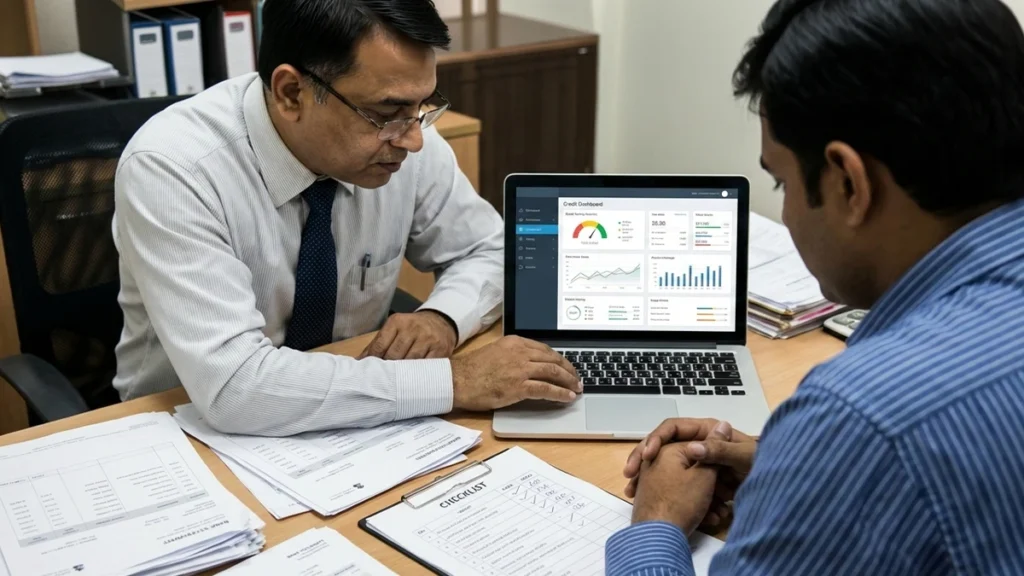
When we talk about “eligibility,” most people think of a simple checklist. You might think, “I have a PAN card and a job, so I am good.” Well, that is just the surface.
In reality, the personal loan eligibility criteria India is a complex risk map. Lenders are not just looking at your age or city. They are trying to predict if you will pay them back three years from now.
Actually, eligibility is about your repayment capacity. A bank might see that you earn one lakh a month, but if you spend ninety thousand on rent and old EMIs, you are a high-risk person.
On the other hand, someone earning forty thousand with zero debt is a hero in the eyes of a lender. Approval is never a guarantee. It is a match between your profile and the bank’s current appetite for risk.
If the economy is shaky, they tighten the rules. If things are booming, they might relax a bit. You need to know where you stand before you click “Apply.”
How Banks & NBFCs Actually Check Your Eligibility
Banks and NBFCs use a secret formula to judge you. They call it the “Multi-Factor Scoring Model.” First, they look at your income stability.
Do you get your salary on the same date every month? If yes, you win points. Then, they scan your credit behavior. They do not just look at your score; they look at your “mix” of loans.
Banks are usually stricter. They want top-tier companies and high scores. NBFCs are a bit more flexible. They might give a nbfc-personal-loan-for-bad-credit if you can show a strong bank statement.
They care about your daily transaction patterns. If you pay your electricity and phone bills on time via UPI, that data now helps your case. This is a major gap filler that traditional banks often miss.
Bank vs. NBFC: Eligibility Approach
| Feature | Traditional Banks | Fintech NBFCs |
|---|---|---|
| CIBIL Score | Usually 750+ required | Accept 600 – 700 often |
| Income Proof | Strict Salary Slips/ITR | Bank Statements/UPI Flow |
| Company Tier | Prefer MNCs/Govt | Any Registered Entity |
| Process Speed | 2 – 5 Days | 10 Minutes – 24 Hours |
Core Personal Loan Eligibility Criteria in India
Let us get into the nitty-gritty of the personal loan eligibility criteria India. These are the “must-haves” that every lender will check. If you fail even one, the gate closes.
- Age Limits: You must be at least 21 years old. Most lenders stop at 60 for salaried folks. However, some like Bajaj Finserv now go up to 80 years at maturity for specific profiles.
- Employment Type: You need to be either a salaried employee or a self-employed professional. Banks love government workers and MNC employees because their jobs are “safe.” If you work for a small private firm, you might need a higher salary to qualify.
- Minimum Income: In metros like Mumbai or Delhi, you usually need ₹25,000. In smaller cities, ₹15,000 might work.
- Credit Score: While 750 is the gold standard, the truth is that the personal loan eligibility criteria India is shifting. Many apps now look at your “Social Credit” if your CIBIL is low.
Wait, before you focus only on loans, think about your family’s safety too. Understanding term insurance vs life insurance 2026 is just as vital for a solid financial profile as getting a loan.
Eligibility Calculation – With Real Examples
Most sites just give you a calculator. I want to show you real numbers. This helps you see where you fit in the personal loan eligibility criteria India.
Example 1: The Metro Professional
Rohan works in a private firm in Bangalore. He earns ₹25,000. He has no other loans.
Eligible Amount: Likely ₹3 Lakh to ₹5 Lakh.
Why?: He has a clean slate and a decent entry-level salary for a metro.
Example 2: The High Earner with Debt
Priya earns ₹80,000 in Mumbai. But she has a car loan and a home loan. Her total EMIs are ₹50,000.
Eligible Amount: Very Low or Zero.
Why?: Her Debt-to-Income (DTI) ratio is too high. She only has ₹30,000 left for all other life costs.
Example 3: The Self-Employed Shop Owner
Anil runs a small grocery store. He does not have a salary slip but has an ITR showing ₹4 Lakh annual profit.
Eligible Amount: ₹2 Lakh to ₹4 Lakh.
Why?: Banks will check his 6-month bank statement to see daily cash flow.
Example 4: The Low CIBIL Success
Kiran has a score of 620 due to a missed credit card payment two years ago. But now he earns ₹60,000.
Result: He might get a low cibil loan 2026 from a fintech lender, but at a higher interest rate.
Factors That MOST Impact Personal Loan Approval

It is not a random choice. Lenders prioritize certain factors over others when checking the personal loan eligibility criteria India.
- Debt-to-Income (DTI) Ratio: This is the king of factors. Keep your total EMIs below 40% of your take-home pay. If you cross 50%, rejection is almost certain.
- Employer Profile: Working for a “Category A” company (like Google or TCS) can get you a loan in minutes. If your company is unknown, the bank will dig deeper into your files.
- Job Continuity: They want to see you have been employed for at least one year. Frequent job hopping every three months makes you look unstable.
- Banking History: If you have “cheque bounces” or “ECS returns” in your statement, you are in trouble. It shows you are careless with your money.
Personal Loan Eligibility for Different Profiles
The personal loan eligibility criteria India changes based on who you are.
Salaried Employees
You are the favorite of the banking world. Your income is predictable. You just need 3 months of slips and 6 months of bank statements. Usually, a salary of ₹20,000 is the baseline for most private banks.
Self-Employed Individuals
You need to prove your business is alive and well. Lenders look for 2 years of business existence. Your ITR and GST filings are your main weapons here. They want to see “Business Vintage.”
Private Company Employees
If you work for a small startup, the personal loan eligibility criteria India can be tough. Lenders check the “registration” of your firm. If it is a private limited company, you have a better shot than a proprietorship.
First-Time Borrowers
If you have never taken a loan, you have “No Hit” on your CIBIL. This is tricky. Start with a small consumer durable loan (like for a phone) to build your history. This opens the door for bigger personal loans later.
Why Personal Loan Applications Get Rejected
Rejection hurts, but it is often avoidable. Banks rarely tell you the “real” reason. Here are the top hidden traps in the personal loan eligibility criteria India.
- Soft Rejection: This happens when you do not meet the age or income floor. It does not hurt your score much.
- Hard Rejection: This is due to bad credit behavior or fraud suspicion. This stays in your history and makes other banks say no too.
- Address Issues: If you live in a “blacklisted” area where many people have defaulted before, you might get rejected. It is unfair, but it happens.
- Inconsistent Data: If your name is “Raj Kumar” on Aadhaar but “Raj K.” on PAN, the AI will flag it. Make sure your papers match perfectly.
How to Improve Your Personal Loan Eligibility (Step-by-Step)
If you do not fit the personal loan eligibility criteria India today, do not panic. You can fix it.
Immediate Fixes (0–30 days)
- Close Small Debts: Pay off those tiny “Buy Now Pay Later” bills. It clears up your DTI ratio instantly.
- Correct Errors: Check your CIBIL report for mistakes. If a closed loan shows as “Open,” raise a dispute.
Short-term Fixes (1–3 months)
- Maintain a Balance: Do not let your bank account reach zero. Keep a small buffer. It shows you handle cash well.
- Avoid New Inquiries: Stop applying for credit cards every week. Each search drops your score a bit.
Long-term Fixes (3–6 months)
- Income Stability: Stay in your current job. Six months of steady salary slips from one boss is gold.
- Build Score: Use a “secured credit card” against an FD to boost your points if you are at the bottom.
Personal Loan Eligibility Myths vs Reality
There is a lot of bad advice on the internet. Let us clear the air about the personal loan eligibility criteria India.
Myth: Higher salary means automatic approval.
Reality: A ₹2 lakh salary with ₹1.5 lakh in debt will get rejected. Cash flow is more important than the gross number.
Myth: Checking your own CIBIL score lowers it.
Reality: No. Checking it yourself is a “Soft Inquiry.” It has zero impact. Only bank searches are “Hard Inquiries.”
Myth: You need a 900 score for a loan.
Reality: Most people get approved with a 720 – 750 score. Perfection is not required.
Documents Required for Personal Loan Eligibility Check
You need your toolkit ready. High-quality scans lead to faster approvals.
Document Checklist for Applicants
| Document Category | Salaried Applicants | Self-Employed Applicants |
|---|---|---|
| Identity Proof | PAN Card / Aadhaar | PAN Card / Aadhaar |
| Income Proof | 3 Months Salary Slips | 2 Years ITR with Audit |
| Bank History | 6 Months Statement | 12 Months Current A/c |
| Experience | Offer Letter / Form 16 | GST Certificate / Shop Act |
| Address Proof | Utility Bill / Rent Agreement | Office & Home Utility Bills |
Personal Loan Eligibility FAQs
What is the minimum CIBIL score for a personal loan in India?
Most banks want 750. However, fintech apps are part of the personal loan eligibility criteria India that accepts 650 or even 600 if your income is high.
How much salary is needed for a ₹10 Lakh loan?
Usually, you need a take-home pay of at least ₹50,000 to ₹60,000, assuming you have no other major EMIs. Lenders want to see you can comfortably pay back a ₹20k – ₹25k monthly EMI.
Can eligibility differ between banks?
Yes, absolutely. HDFC might say no while Axis says yes. Each bank has its own “risk bucket.” Always compare at least three lenders.
Does checking eligibility affect my credit score?
If you use a “calculator” or a “soft check” tool, it does not. But if you fill out a full application and the bank “pulls” your report, it will show as a hard inquiry.
Final Thoughts – How to Maximize Approval Chances in 2026
We have covered a lot of ground today. The personal loan eligibility criteria India is a living system. It changes as you grow in your career. The best thing you can do is be a “Smart Borrower.”
This means knowing your numbers better than the bank does.
Do not apply blindly. Use a calculator, fix your small debts, and ensure your papers are clean. If you are rejected once, do not jump to another bank immediately.
Wait, find the reason, fix it, and then try again. Your financial health is a long-term project. Treat it with care, and the banks will eventually come to you with the best offers.
Stay safe, drive your dreams, and manage your credit wisely. You have got this.
External Resources for Further Reading
- RBI Guidelines on Fair Lending Practices
- Official CIBIL Website to Check Your Score
- National Housing Bank – Understanding Credit Flow
Disclaimer
Personal loan interest rates and the personal loan eligibility criteria India vary by provider and region. Always read the policy document and the Most Important Terms and Conditions (MITC) carefully before signing.
This article is for informational purposes and does not constitute official financial advice. Avinash and FinanceHelpCheck are not responsible for loan rejections or financial decisions made by readers. Apply responsibly.