- What Is Insurance and Why It Matters in India Today
- How Insurance Is Classification in India
- Major Types of Life Insurance in India (With Use-Cases)
- Major Types of General Insurance in India
- Summary of General Insurance Coverage
- Specialized & New-Age Insurance Types (2026 Update)
- Mandatory vs Optional Insurance in India
- Types of Insurance Based on Life Stage
- Recommended Insurance Mix by Age
- How to Choose the Right Insurance Policy
- Common Insurance Myths in India
- FAQs – Types of Insurance in India
- Final Thoughts – Building the Right Insurance Mix
- Author’s Final Note by Deeksha
- Disclaimer
Hi there, I am Deeksha. If you are feeling a bit lost looking at the dozens of different types of insurance in India, I totally get it. Honestly, it feels like every time you open a bank app or check your email, someone is trying to sell you a new policy. It is overwhelming.
Just last year, my cousin Ravi thought he was fully covered because his office gave him a basic health plan. Then, a minor accident happened, and he realized his “coverage” was barely enough to pay for the room rent.
He ended up paying lakhs out of his own pocket. That is when it hit me—most of us just buy what is convenient, not what we actually need. Today, I want to walk you through the real landscape of types of insurance in India so you never have to face a surprise like Ravi did.
Think of insurance as a financial safety net. It is not just about a monthly bill; it is about knowing that if something goes wrong, you won’t lose your hard-earned savings.
In 2026, the market has changed, and we have smarter, more specific plans than ever before. Let’s break down these types of insurance in India together, friend to friend, so you can build a shield that actually works for you.
What Is Insurance and Why It Matters in India Today
Actually, insurance is just a contract where you pay a small amount (the premium) to a company, and they promise to cover your big losses later. Why is it so essential in our country right now? Well, life in India is unpredictable.
From health scares to road accidents, risks are everywhere. Many of us make the mistake of thinking our savings are enough. But a single hospital stay or a major house repair can wipe out years of hard work in a few days.
There is a huge misconception that insurance is just another way to save money or save on taxes. While tax benefits are great, that is not the primary goal. Real insurance is about risk transfer.
You are paying the experts to take on the financial headache of your “what-ifs.” Whether you are a student just starting out or a parent planning for the future, understanding the various types of insurance in India is the first step toward true peace of mind.
How Insurance Is Classification in India

Lenders and regulators like the IRDAI divide the world of protection into a few clear buckets. Competitor sites often make this look like a messy web, but it is actually quite simple. You can group almost everything into three main categories.
- Life Insurance: This covers “you.” It provides money to your family if you are no longer around. It can also help you save for long-term goals like retirement.
- General Insurance: This covers “your stuff” and your health. It includes your car, your home, your health, and even your travel plans.
- Specialized/Emerging Insurance: These are the new kids on the block. Think of things like cyber insurance for your digital life or professional indemnity for your career.
In India, some of these are mandatory by law, while others are voluntary but highly recommended. For instance, you cannot drive a car without motor insurance, but you choose to buy a life policy to protect your kids. Understanding how these types of insurance in India are structured helps you see the gaps in your own protection.
Major Types of Life Insurance in India (With Use-Cases)
Life insurance is the foundation of any good financial plan. It is about making sure the people you love are taken care of, no matter what. While looking at these options, you might find it helpful to compare term insurance vs life insurance 2026 to see which specific route fits your current budget best.
Term Insurance
This is the purest form of protection. You pay a low premium for a very high cover (sum assured).
Who needs it: Anyone who has people depending on their income. If you have a home loan or kids, this is a must-have.
Who doesn’t: If you have zero debt and enough wealth to support your family forever, you might skip it.
Real-life example: My friend Arjun, aged 30, pays just ₹1,000 a month for a ₹1 Crore cover. It’s the cost of two pizzas for total peace of mind.
Endowment Plans
These are a mix of insurance and savings. If you survive the policy term, you get a lump sum back. If not, your family gets the death benefit. These are great for people who want a “guaranteed” return and find it hard to save on their own.
ULIPs (Unit Linked Insurance Plans)
ULIPs are for the risk-takers. Part of your money goes to insurance, and the rest is invested in the stock market. In 2026, ULIPs have become more transparent with lower charges. They are suitable if you have a long-term goal, like 10-15 years, and want to beat inflation.
Whole Life Insurance
This policy stays with you until you are 99 or 100 years old. It is often used for wealth transfer. It’s like leaving a legacy for your grandchildren.
Child & Pension Plans
These are goal-based. Child plans ensure your kid’s education is funded even if you aren’t there. Pension plans, on the other hand, build a corpus to give you a steady income after you stop working.
Major Types of General Insurance in India
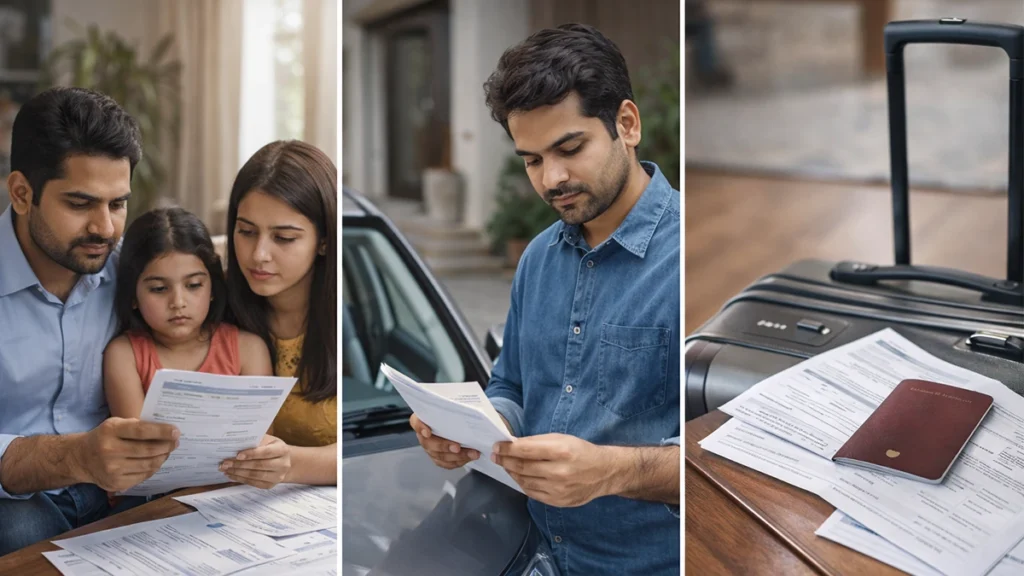
General insurance is about protecting your assets and your immediate well-being. This is where most of our daily interactions with the insurance world happen.
Health Insurance
In 2026, medical costs are skyrocketing. A basic “Individual” plan covers just you, while a “Family Floater” covers your whole house under one sum insured. A fresh update you should know: IRDAI now mandates that mental health coverage must be included in all standard health policies. This is a huge win for holistic health in India.
Motor Insurance
This is legally required. “Third-party” insurance is the bare minimum to cover damage you cause to others. However, a “Comprehensive” policy is what I recommend because it also covers damage to your own vehicle from accidents, theft, or natural disasters.
Home Insurance
Whether you are an owner or a tenant, you need this. Owners protect the structure, while tenants can buy “Contents Insurance” to protect their furniture, electronics, and jewelry from fire or theft.
Travel Insurance
Don’t skip this when going abroad. It covers lost passports, flight delays, and most importantly, overseas medical emergencies which can cost thousands of dollars.
Summary of General Insurance Coverage
| Insurance Type | What it Covers | Mandatory? | Best For |
|---|---|---|---|
| Health | Hospital bills, Daycare, OPD | No | Everyone |
| Motor | Vehicle damage, Liability | Yes (Third-party) | All Vehicle Owners |
| Home | Structure, Furniture, Theft | No | Homeowners & Renters |
| Travel | Med-ex, Trip delays, Lost bags | Often for Visas | International Flyers |
Specialized & New-Age Insurance Types (2026 Update)
The world is moving fast, and so are the types of insurance in India. We are seeing some really cool, modern plans that didn’t exist a decade ago.
Cyber insurance is becoming a big deal. With all our banking and shopping happening online, the risk of identity theft or phishing is real. These plans help you recover lost money and pay for legal help. Then there is “Professional Indemnity.” If you are a doctor, lawyer, or consultant, this protects you if a client sues you for an error in your work.
Even MSMEs and small business owners now have access to “Business Interruption” insurance. If a fire stops your shop from running, the policy pays for your lost profits during that time. While protecting your business is vital, many entrepreneurs are also diversifying their personal wealth. Some are even looking at commodities, learning how to invest in copper in India as a way to hedge their portfolios against inflation.
Mandatory vs Optional Insurance in India
It is helpful to know what the law says vs what common sense says. Not every policy is a “choice.”
Legally Required: Motor Insurance (Third-party) is the only one the government forces you to have. You can face heavy fines without it.
Strongly Recommended: Health insurance and Term life insurance. These are “financial lifebuoys.”
Optional: Travel, Home, and specialized plans. These depend on your lifestyle and the value of your assets.
Types of Insurance Based on Life Stage

Your needs change as you grow. What worked for you at 22 won’t be enough at 45.
- Students & Young Professionals: Focus on a good Health plan and maybe a Personal Accident cover. You probably don’t need a huge life cover yet if nobody depends on you.
- Families: This is the “high-stakes” stage. You need a solid Family Floater health plan and a Term insurance policy that covers at least 10-15 times your annual income.
- Senior Citizens: Focus on Senior Citizen Health plans and perhaps a Pension plan to ensure liquidity.
- Business Owners: Look into Liability insurance and Group Health plans for your employees to build a loyal team.
Recommended Insurance Mix by Age
| Age Group | Priority 1 | Priority 2 | Priority 3 |
|---|---|---|---|
| 20s | Individual Health | Accident Cover | Critical Illness |
| 30s | Term Insurance | Family Floater | Child Plan |
| 40s | Critical Illness | Top-up Health | Retirement Plan |
| 50s+ | Senior Health | Pension Plan | Whole Life |
How to Choose the Right Insurance Policy
Don’t just buy the first thing your bank agent suggests. Follow this simple framework:
Step 1: Identify your risk. Are you worried about hospital bills or your family’s future?
Step 2: Logic for coverage amount. For health, look at the cost of a good hospital in your city. For life, calculate your debts + 15 years of family expenses.
Step 3: Policy vs Add-ons. Sometimes a basic policy with a “Rider” (like a critical illness rider) is cheaper than buying two separate plans.
Step 4: Claim Settlement Ratio. Always check the insurer’s CSR. There is no point in a cheap policy if the company refuses to pay when you actually need it. Check the latest data on the IRDAI Annual Report.
Common Insurance Myths in India
Let’s bust some common lies about the types of insurance in India.
“Insurance is an investment”: No, it is a safety tool. Mixing the two often gives you low cover and low returns. Keep them separate for the best results.
“Employer insurance is enough”: What happens if you lose your job or change companies? You could be left with zero cover when you are sick. Always have your own personal health plan.
“Cheapest policy is best”: A cheap policy might have many “exclusions” (things it won’t pay for). Read the fine print before you sign.
FAQs – Types of Insurance in India
How many types of insurance are there in India?
There are dozens, but they mainly fall into Life and General insurance. Common ones include Health, Motor, Term, and Home insurance.
Which insurance is mandatory?
In India, only Third-party Motor Insurance is mandatory by law under the Motor Vehicles Act.
Which insurance should I buy first?
Always start with Health Insurance. A medical emergency is the most common financial risk we face daily. Follow it with Term Insurance if you have dependents.
Life vs general insurance difference?
Life insurance covers the risk of death or provides for old age. General insurance covers assets (like cars/homes) and health expenses.
Final Thoughts – Building the Right Insurance Mix
Choosing from the various types of insurance in India is about being a responsible adult. It’s about making sure your dreams don’t crash because of one bad day. Don’t try to buy everything at once. Start with the basics Health and Term and then add others as your income and responsibilities grow.
Actually, the best time to buy was yesterday, but the second-best time is today. Be smart, read your policy documents, and talk to a trusted advisor. Your future self will thank you for the shield you are building right now. Stay safe and stay covered!
Author’s Final Note by Deeksha
“I’ve seen too many families broken by financial stress that could have been avoided with a simple ₹500/month policy. Take that step today. It’s the kindest thing you can do for your family.”
Disclaimer
Insurance is a subject matter of solicitation. The information provided here about types of insurance in India is for educational purposes only. Always read the policy terms, conditions, and exclusions carefully. Interest rates, premiums, and tax benefits (under Section 80C and 80D of the Income Tax Act) are subject to change as per government regulations. Consult a certified insurance advisor before making any purchase decisions. FinanceHelpCheck and Deeksha are not responsible for any financial losses or claim rejections.