
- Why Investors are Watching Copper in 2026 — Market Drivers
- 3 Ways Indians Can Get Exposure to Copper
- How MCX Copper Futures Work — Practical Guide
- Investing via Copper Stocks
- Global Copper ETFs & How Indians Access Them
- Tax, Costs & Regulatory Things to Know
- Risk Management & Allocation
- Step-by-Step Checklist — Start Investing in Copper
- 2 Real Examples
- FAQ
- Conclusion — Building the Right Copper Mix
Well, honestly, folks, if you have been looking at your bank account and wondering where to put your money for real growth, you are not alone.
In 2026, the old ways of just sticking cash in a savings account or buying only gold are changing. Many smart people are now asking how to invest in copper in indian market because this red metal is literally everywhere.
From the electric vehicle (EV) parked in your neighbor’s garage to the massive AI data centers powering our phones, copper is the silent engine of the new world.
Think about it. Every time a new green energy project starts or a tech giant builds a new server farm, they need miles of copper wiring. Research indicates that the global supply is struggling to keep up with this massive demand.
So, today, I, Kripal, want to show you exactly how to invest in copper in indian market so you can potentially profit from this structural shift. We will look at stocks, futures on the MCX, and even how to grab global ETFs. By the end of this, you will have a clear plan to secure your wealth in a market that is quite literally “electric.”
Why Investors are Watching Copper in 2026 — Market Drivers
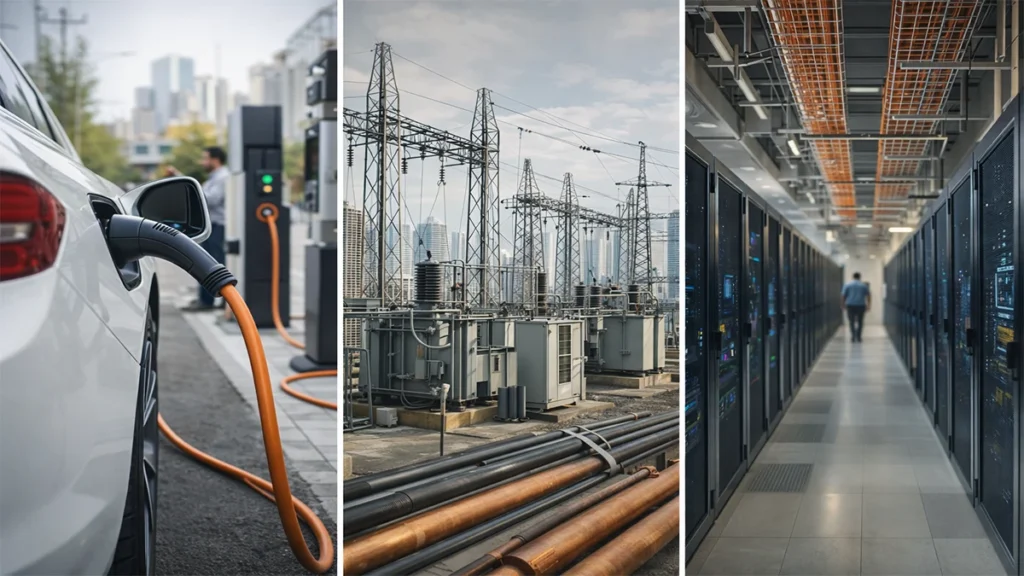
Actually, if you look at the facts, copper is often called “Doctor Copper” because its price tells us how the global economy is doing. But in 2026, it is doing much more. The “Electrification Multiplier Effect” is real.
Look, an EV needs about four times more copper than a regular petrol car. Plus, the surge in AI infrastructure means we need more power grids, and that means—you guessed it—more copper.
Currently, mining production is hitting a wall. New mines take years to start, but the demand is happening now. This supply tightness is causing high price volatility. For a trader, that volatility is where the money is made.
For a long-term buyer, it is a sign that the asset has a high value. Understanding how to invest in copper in indian market means recognizing that we are in a “green transition” that cannot happen without this metal. It is not just a trend; it is a necessity for the world to keep moving forward.
3 Ways Indians Can Get Exposure to Copper
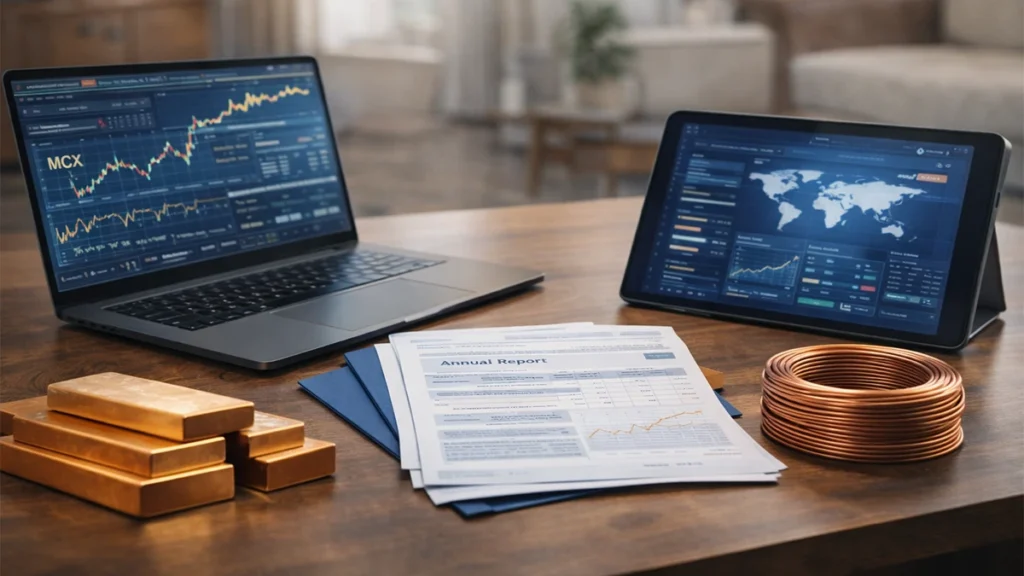
Right, so how do you actually get started? You don’t need to go out and buy physical copper pipes and hide them under your bed. That would be a mess. Instead, we use financial tools. The table below gives you a quick look at the main routes.
Copper Investment Methods Comparison
| Method | Directness | Pros | Cons | Typical Investor |
|---|---|---|---|---|
| MCX Copper Futures | Very High | Tracks real-time price; High leverage | Needs daily monitoring; High risk | Active Traders |
| Copper Stocks | Medium | Earn dividends; No expiry dates | Company management risk | Long-term Savers |
| Global ETFs | High | Pure price play; Global diversification | FX costs; Tax complexity | Diversified Investors |
Honestly, if you are a beginner, starting with stocks is usually the best path. But if you have some experience and want to see fast results, knowing how to invest in copper in indian market through the MCX is a game-changer. Let’s break these down one by one.
How MCX Copper Futures Work — Practical Guide
Now, listen closely because this is where the big numbers happen. The Multi Commodity Exchange (MCX) is where most of the heavy trading in India takes place. When you trade futures, you are basically making a deal to buy or sell copper at a future date at a price you agree on today.
The contract specs are important. A “lot” in copper is usually 2,500 kg. That is a lot of metal! You don’t pay the full price of 2,500 kg; instead, you pay a “margin.” This margin is usually around 10% to 20% of the total value.
How to start:
- Open a Commodity Account: You need to ask your broker to enable the commodity segment.
- Enable Derivatives: Since futures are derivatives, you must sign the paperwork.
- Deposit Margin: You need cash in your ledger to start.
- Place Order: You can go “Long” (if you think prices will rise) or “Short” (if you think they will fall).
Example Math for 1 Lot of MCX Copper
| Item | Calculation/Value |
|---|---|
| Current Copper Price | ₹1,300 per kg |
| Lot Size | 2,500 kg |
| Total Notional Value | ₹32,50,000 |
| Margin Required (say 15%) | ₹4,87,500 |
| P&L on ₹10 price move | ₹25,000 |
Basically, if the price moves by just ₹10, you could win or lose ₹25,000. That is the power of leverage. It is fast, it is exciting, but it is also risky.
If you are struggling with cash for such high-margin trades, you might be looking for ways to boost your capital, and learning about a low Cibil loan 2026 could help you manage your personal cash flow while your investments grow. Always remember, leverage is a double-edged sword.
Investing via Copper Stocks
If the stress of daily price swings in futures is not for you, then stocks are your best friend. In India, we have some massive companies that either mine copper or process it. When you buy their shares, you are betting on their business success and the price of copper.
- Hindustan Copper (HCL): This is the only vertically integrated copper producer in the country. They own the mines. If copper prices go up, HCL usually sees a big jump in profit.
- Hindalco Industries: They are a global giant. While they do a lot with aluminum, their copper business is huge. They have a massive refinery in Dahej.
- Vedanta Limited: This company has its hands in many metals, including copper. They often pay high dividends, which is a nice “thank you” to investors.
When you look at how to invest in copper in indian market via stocks, you should check their production guidance. If a company plans to dig up more copper next year, their stock might rise even if the metal price stays the same.
I usually tell folks to keep about 60% of their copper “budget” in these solid stocks and keep the rest for more active trades.
Global Copper ETFs & How Indians Access Them
Sometimes, the Indian market is not enough. You might want to track the global price exactly. In India, we don’t have a dedicated “Copper ETF” like we have for Gold. So, we look towards the US or UK markets.
You can use international brokers (like Vested or Indmoney) to buy these. You might want to check out the top 10 copper ETF in India and global lists to see which ones have the lowest fees. Most of these funds hold either physical copper or shares in global mining giants like Freeport-McMoRan.
Buying these requires you to follow the LRS (Liberalised Remittance Scheme) rules set by the Reserve Bank of India. It involves a bit more paperwork, and you have to think about the US Dollar vs the Indian Rupee, but it gives you a truly global portfolio.
Tax, Costs & Regulatory Things to Know
Let’s talk about the boring stuff that actually matters: taxes. If you make money, the government wants a share.
- Futures Tax: Income from MCX futures is often treated as “Business Income.” You can offset your trading losses against other business profits, which is a plus.
- Stock Tax: If you sell stocks after one year, you pay Long Term Capital Gains (LTCG). If you sell before that, it is Short Term Capital Gains (STCG).
- Costs: You have to pay brokerage fees, GST on those fees, and exchange charges.
Also, you must finish your KYC (Know Your Customer) steps. Banks and brokers are very strict about this now. If you are trading internationally, you have to report it in your ITR (Income Tax Return). I am not a tax expert, so please talk to a CA to make sure you are doing it right. You can find official rules on the Income Tax Department website.
Risk Management & Allocation
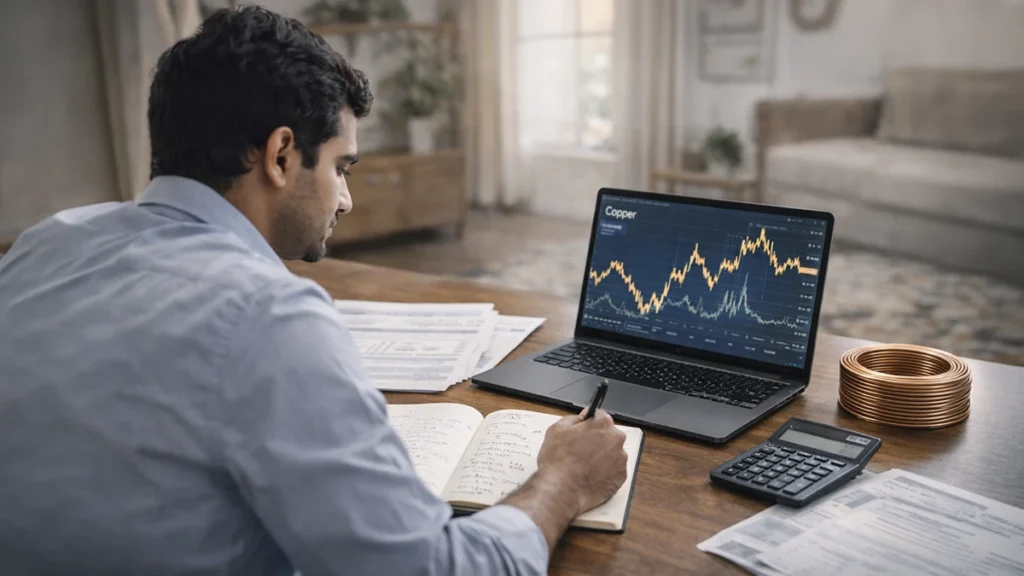
Look, I’ve seen people lose their life savings because they went “all in” on one trade. Don’t be that person.
- Allocation: Most experts suggest keeping only 3% to 8% of your total money in commodities like copper. It is a “satellite” part of your plan, not the whole thing.
- Stop-Loss: If you are trading futures, always, always use a stop-loss. It is a rule that tells the computer to sell your position if the price drops too low, so you don’t lose more than you can afford.
- Contango & Roll Costs: In futures, when you move from one month’s contract to the next, there is a cost. It is called “rolling over.” It can eat into your profits if you are not careful.
Step-by-Step Checklist — Start Investing in Copper
If you are ready to take the leap, here is your quick list to get it done today:
- Pick your path: Do you want stocks, futures, or ETFs?
- Open the account: Call your broker and get the commodity segment active.
- Fund it: Transfer the cash you need for the margin or the stock purchase.
- Start Small: Don’t buy a full lot on day one. Try a smaller “mini” contract or just a few shares of Hindalco.
- Watch the News: Follow China’s factory data and the London Metal Exchange prices. They drive the whole market.
2 Real Examples
The Careful Saver (Anjali)
Anjali has ₹50,000. She doesn’t want to watch the screen all day. She decides to put ₹30,000 into Hindustan Copper and ₹20,000 into a global ETF. Over six months, copper prices rise by 15%. Her stocks grow because the company is making more money, and her ETF gives her a safe return. She is happy and sleeps well.
The Tactical Trader (Raj)
Raj wants to learn how to invest in copper in indian market for quick gains. He has ₹7 Lakhs. He buys 1 lot of MCX copper when he sees a breakout on the chart. The price moves up from ₹1,300 to ₹1,340 in three days. Raj makes a profit of ₹1,00,000 (40 points x 2,500 kg). He uses a tight stop-loss to make sure he doesn’t lose his capital if the market turns.
FAQ
How to buy copper in Zerodha?
Actually, it is simple. Log in to Kite, go to your profile, and click on “View Segments.” Select “Commodity” and submit. Once active, search for “COPPER” in the search bar and you will see the futures contracts.
Are there copper ETFs in India?
Currently, there are no dedicated copper ETFs listed on the NSE or BSE. You have to buy international ETFs using a global brokerage account.
Is copper a good long-term investment?
Yes, because of the “Green Energy” boom. However, it can be very volatile, so it should not be your only investment.
Which is better, gold or copper?
Gold is a “safe haven” for when things go wrong. Copper is an “industrial bet” for when the world is growing. A good portfolio usually has a bit of both.
Conclusion — Building the Right Copper Mix
To wrap it up, learning how to invest in copper in indian market is a smart move for 2026. Whether you choose the fast-paced world of MCX futures or the steady growth of copper stocks, the key is to start small and stay informed. The world needs this metal to build the future, and being on the right side of that trade can truly help you reach your financial goals.
Don’t wait until the prices are at an all-time high. Check your budget, talk to your broker, and start building your copper shield today.
Cheers to your success!
Disclaimer: This article is for educational purposes only. Investing involves risk. Please consult a financial advisor before making any decisions.