- Understanding Postal Life Insurance vs Private Insurance in 2026
- The Bonus Factor: Where Does Your Money Grow Faster?
- Premium Comparison:
- Claim Settlement and Digital Services
- Key Differences: Postal Life Insurance vs Private Insurance
- The Hidden Truth: Why Agents Avoid This Topic?
- FAQs on Postal Life Insurance vs Private Insurance
By Deeksha | Updated: 25 March 2026 | Postal Life Insurance vs Private Insurance
PLI vs Private Insurance: Key Points
- PLI bonus rate: ₹52 per ₹1,000 Sum Assured (2026)
- PLI premiums are 15-20% lower than private endowment plans
- PLI is government-backed, zero corporate failure risk
- Private insurers hit 99%+ Claim Settlement Ratio (IRDAI data)
- PLI eligibility is limited to govt employees and listed company professionals
- Private insurance is open to everyone, including freelancers and business owners
- PLI runs on fixed guaranteed bonuses, private offers market-linked options
- Private apps offer 24/7 digital support, PLI is still catching up on tech
- Agents rarely recommend PLI because it pays low commission
- PLI wins on returns and cost, private wins on flexibility and speed
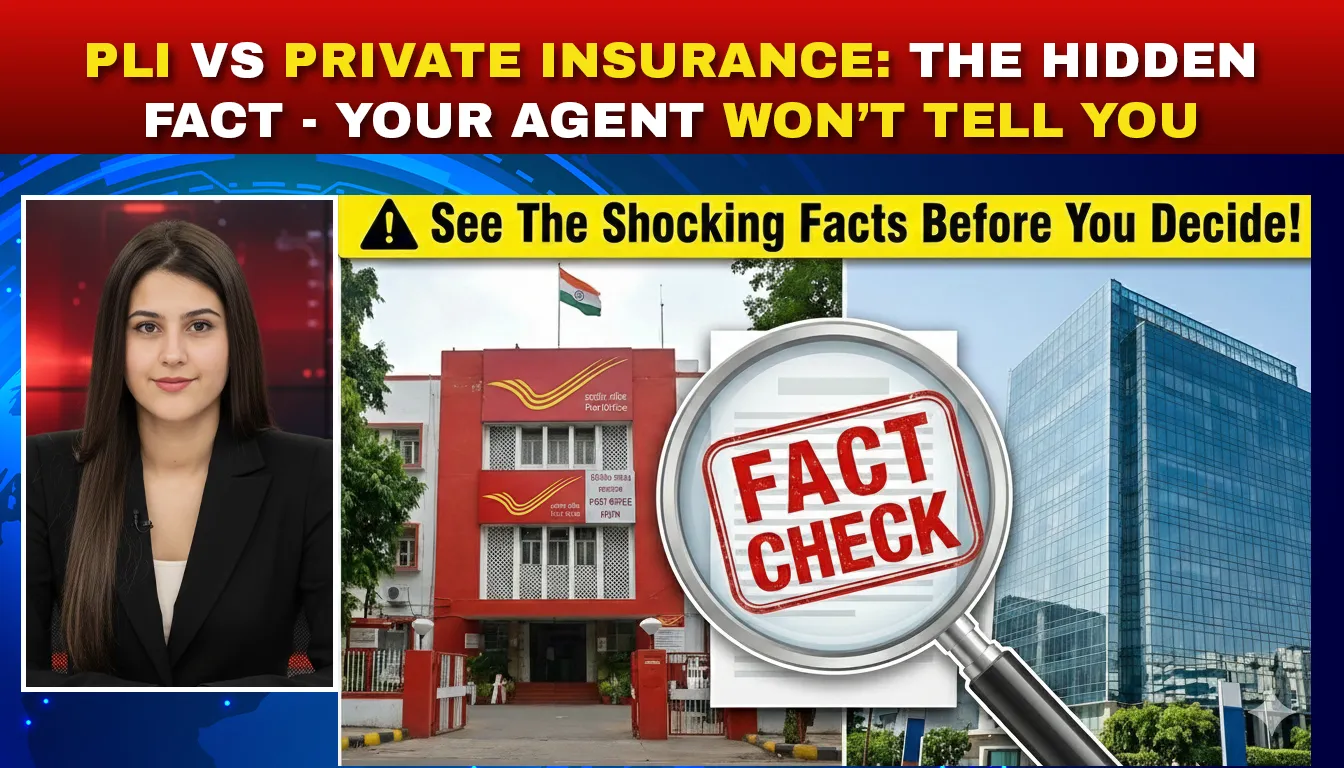
When it comes to securing your family’s future, the most common debate in India is Postal Life Insurance vs Private Insurance. On one hand, you have the trust and high bonus rates of the Department of Posts, and on the other, the convenience and rider benefits of private giants. But which one truly fits your financial goals in 2026?
In this comprehensive guide, we will analyze PLI vs Private Insurance based on the latest bonus rates, premium costs, and claim settlement speed. To make things easier, we have also included a live tool to help you decide between Postal vs Private Insurance by calculating your exact maturity returns.
Understanding Postal Life Insurance vs Private Insurance in 2026
Before diving into the numbers, it is essential to understand the core philosophy behind PLI vs Private Insurance PLI was originally designed for government employees but has now opened its doors to professionals working in listed companies. Conversely, private insurance is available to everyone, from small business owners to freelancers.
The biggest differentiator in this Insurance battle is the management cost. Since PLI operates with minimal overheads, it consistently offers higher bonus rates than its private counterparts.
The Bonus Factor: Where Does Your Money Grow Faster?
For many investors, the decision of PLI vs Private Insurance boils down to returns. As of 2026, the bonus rate for PLI Santosh remains at a lucrative ₹52 per ₹1,000 Sum Assured. You can track the latest updates here: Official India Post PLI Bonus Rates 2026. When you compare this data in the context of Insurance, private companies often struggle to match these guaranteed government bonuses.
However, in the Both Insurance debate, private players like Tata AIG or Bajaj Allianz argue that their market-linked products can potentially offer higher long-term wealth, albeit with higher risk.
However, in the PLI vs Private Insurance debate, private players like Tata AIG or Bajaj Allianz argue that their market-linked products can potentially offer higher long-term wealth, albeit with higher risk.
Also Check Health Insurance Guide
Premium Comparison:
One of the most striking things you will notice when researching Postal Life Insurance vs Private Insurance is the premium difference. Usually, the premium for PLI is significantly lower. In a direct head-to-head of Postal Life Insurance vs Private Insurance, a 30-year-old individual might pay 15-20% less for a ₹10 Lakh cover in PLI compared to a similar endowment plan in the private sector.
This makes Both Insurance a clear choice for those who are strictly budget-conscious and looking for traditional life cover.
Claim Settlement and Digital Services
While PLI wins on returns, the Postal Life Insurance vs Private Insurance comparison takes a turn when we talk about technology. Private insurers have spent millions on AI-driven claim settlements. According to the latest IRDAI Claim Settlement, leading private insurers now boast a CSR of over 99%. If you value 24/7 mobile app support, the winner in Postal Life Insurance vs Private Insurance might be the private sector.
Nonetheless, the Department of Posts is catching up. In the current Postal Life Insurance vs Private Insurance landscape, even PLI offers online premium payments and digital tracking, though it is still more basic than private apps.
Key Differences: Postal Life Insurance vs Private Insurance
| Feature | Postal Life Insurance (PLI) | Private Insurance |
| Returns | High Bonus (Fixed) | Market Linked/Varied |
| Trust | Government Guaranteed | Corporate Reliability |
| Ease of Buy | Moderate (Form/Docs) | Instant (Digital/App) |
| Cost | Low Premium | Higher Premium |
The Hidden Truth: Why Agents Avoid This Topic?
Most insurance agents will rarely show you a fair comparison of Postal Life Insurance vs Private Insurance. Why? Because PLI does not pay high commissions to agents. When analyzing Postal Life Insurance vs Private Insurance, remember that an agent’s recommendation might be biased toward a product that earns them more, rather than what saves you more.
FAQs on Postal Life Insurance vs Private Insurance
Is Postal Life Insurance vs Private Insurance better for retirement?
For a safe and guaranteed retirement corpus, PLI is often preferred due to its high bonus. However, for flexible riders, private insurance is better.
Who wins the Postal Life Insurance vs Private Insurance battle for claim speed?
Private insurance companies generally offer faster, paperless claim settlements compared to PLI.
Is Postal Life Insurance better than LIC?
Depends on what you want. PLI offers a bonus rate of ₹52 per ₹1,000 Sum Assured in 2026, which is genuinely hard to beat in the traditional insurance space. LIC’s endowment plans typically pay bonuses in the ₹30 to ₹45 range per ₹1,000. So on pure returns, PLI wins. But LIC is open to everyone. PLI is only for government employees and professionals in listed companies. If you qualify for LI, the numbers favor it.
Is Postal Life Insurance scheme safe?
Yes, straight up one of the safest insurance products in India. PLI is backed by the Government of India and operated by the Department of Posts. There’s no private company risk here. No NBFC collapse, no corporate failure scenario. Your money sits under government guarantee. For anyone who values security over flexibility, its about as safe as it gets.
Is PLI good or bad?
Good, but with conditions. The bonus rates are among the highest for traditional life insurance in India. Premiums run 15 to 20% lower than comparable private endowment plans. Claim settlement is reliable. The downside? Limited eligibility, slower digital experience compared to private apps, and no market-linked growth option. If you qualify and want a no-drama, government-backed policy with solid returns, PLI is genuinely good.
What are the 4 types of insurance?
The four main types are life insurance, health insurance, general insurance, and liability insurance. Life insurance covers death or maturity payout. Health insurance covers medical expenses and hospitalisation. General insurance covers non-life assets like vehicles, property and travel. Liability insurance protects against legal claims from third parties. PLI falls under life insurance, specifically the traditional endowment category.
Total Bonus: ₹0
(Based on latest ₹52/1000 Bonus Rate)
Final Verdict on Postal Life Insurance vs Private Insurance
“Choosing between Postal Life Insurance vs Private Insurance depends on your eligibility and priority. If you qualify for PLI and want the highest possible ‘Sarkari’ returns with the lowest premium, the winner is clear. However, if you need a variety of health riders and instant digital service, then private players are the way to go.
Always use a calculator to evaluate Postal Life Insurance vs Private Insurance before making a final commitment. Your decision today will define your family’s financial stability for the next 20 years.
Disclaimer: This article is for informational purposes only and does not constitute financial or investment advice. PLI bonus rates and private insurer data mentioned here are based on publicly available sources as of 2026 and may change over time. Always consult a certified financial advisor before making any insurance or investment decision.